Best Small Native Australian Trees for Backyards
In this guide, we’ll explore the importance of proportion when planting trees, how to choose species with the right root systems, and the best small Australian native trees that fit beautifully into suburban gardens, courtyards, and even small front yards.
When planning a garden, trees are often the heroes of the design. They create shade, attract wildlife, and provide structure and proportion. But not every garden has room for towering gums or sprawling eucalypts — which is where small native Australian trees shine. Compact, adaptable, and easier to manage, these trees can transform your outdoor space without overwhelming it.
In this guide, we’ll explore the importance of proportion when planting trees, how to choose species with the right root systems, and the best small Australian native trees that fit beautifully into suburban gardens, courtyards, and even small front yards.
Why Choose Small Native Trees for Your Garden?
When designing a garden, one of the most important considerations is proportion. A tree that towers too high or spreads too wide can quickly overwhelm a small yard, casting deep shade, drying out the soil, and even damaging surrounding structures. By choosing small native Australian trees, you strike the right balance — adding height, beauty, and structure without losing light, space, or control.
Native trees come with the added advantage of being perfectly suited to Australian conditions. They have evolved to withstand long dry summers, variable soils, and unpredictable weather, which means they generally require far less care than exotic species once established. Smaller varieties, in particular, are an ideal fit for suburban blocks and courtyard gardens, where space is precious but greenery is still desired.
One of the key benefits is their proportionate growth. A tree maturing at 3–6 metres tall will give you shade and vertical presence without swallowing the garden or blocking natural light into your home. Many of these trees also have non-invasive root systems, so you don’t need to worry about cracked paving, clogged drains, or foundations at risk.
From a maintenance perspective, small natives are far more manageable. They can be easily pruned to maintain their size and shape, making them adaptable whether you want a neat hedge, a screening barrier, or a feature tree. Unlike fast-growing giants that constantly demand trimming, small natives often grow at a steady pace, meaning they stay tidy and contained with minimal effort.
Beyond the practical, these trees enrich your garden’s ecosystem. Their flowers, foliage, and seeds provide habitat and food for wildlife, drawing in birds, bees, and butterflies. This not only supports biodiversity but also fills your garden with life, movement, and song.
Finally, planting small native trees is a sustainable choice. They are well adapted to local climates, generally requiring less water and fertiliser than exotics, and they often cope better with Australia’s heat and drought conditions. This makes them a resilient, eco-friendly option for gardeners who want their outdoor space to thrive without constant intervention.
In short, small native trees offer the perfect balance of beauty, functionality, and sustainability. They bring shade and structure to your garden without dominating it, create habitats for wildlife, and grow in harmony with the local environment. For smaller gardens, courtyards, or even front yards, they’re the smart choice that combines proportion with purpose.
Best Small Native Australian Trees for Gardens and Backyards
1. Corymbia ‘Dwarf’ (Compact Gum)
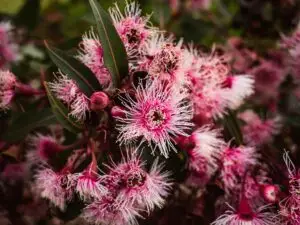
I love dwarf gums because they bring all the drama of a big eucalyptus into a much friendlier size for small gardens. Their flowers are breathtaking — large, fluffy bursts of crimson, pink, or orange that absolutely glow in the sunlight. When they’re in bloom, you’ll hear the garden come alive with lorikeets and bees. Their leaves are a soft grey-green that shimmer slightly when the breeze catches them, and unlike huge gums, they let filtered light through, creating dappled shade rather than deep darkness. They grow to about 3–5 metres and are surprisingly easy to contain with light pruning. Slow to moderate growers, they don’t take over the space but reward patience with a spectacular display every year.
2. Hakea Laurina (Pincushion Hakea)
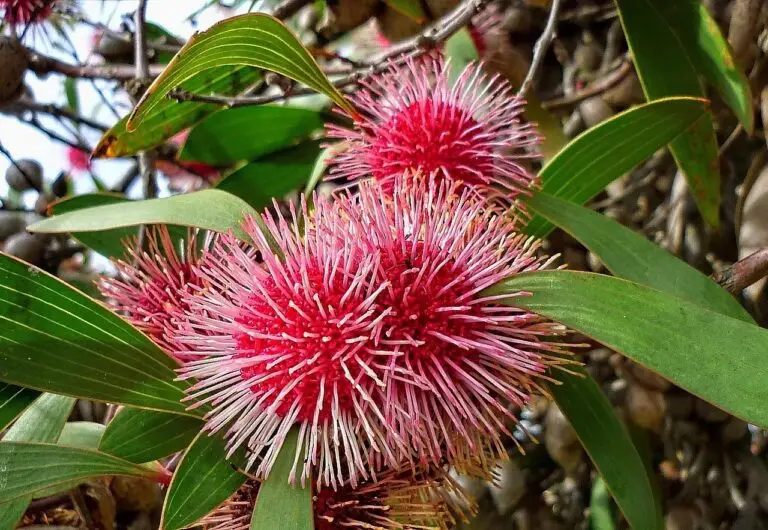
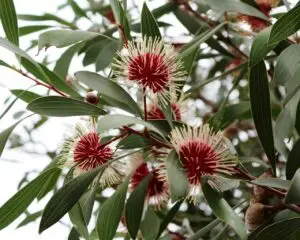
The pincushion hakea is one of those trees that stops people in their tracks. Its rounded flowers — creamy centres with pink-red spikes — are unlike anything else, and in autumn and winter they stand out against the fine, upright foliage. What I love is how sculptural this tree feels; it has an elegant form, almost architectural, and yet when in bloom it softens with a burst of colour. Birds adore it — I often see honeyeaters darting around for nectar. It grows to about 4–6 metres, but it’s easy to keep smaller with pruning. It’s not a fast grower, but that works in its favour if you want something controlled and steady in size.
3. Viminaria juncea (Golden Spray)
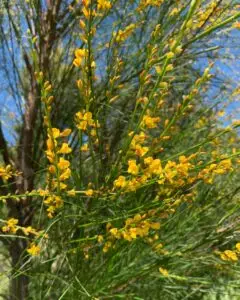
This tree has such a delicate presence in the garden. Its rush-like foliage moves gracefully in the breeze, almost like a weeping willow but lighter and airier. In spring, it absolutely glows with sprays of golden-yellow pea flowers, which catch the light beautifully and seem to hum with bees. Because the leaves are so fine, sunlight filters through in a way that creates a gentle, shifting play of light and shadow. It’s not the fastest grower, but once it takes off it can reach 3–6 metres. I like planting it near water features or in slightly damp areas, since it thrives with moisture. Its nitrogen-fixing ability also makes it a generous neighbour for other plants.
4. Eucalyptus ‘Euky Dwarf’
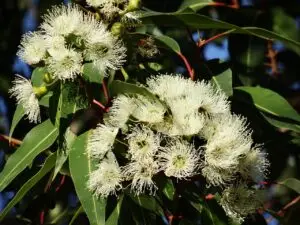
Euky Dwarf is one of my favourite choices for small gardens because it has that classic gum tree look — silvery-blue leaves, smooth bark — but without the worry of it outgrowing the space. The foliage has that unmistakable eucalyptus scent, refreshing and calming when brushed past or picked for a vase. Young leaves are almost round and look beautiful in arrangements, while older leaves are long and elegant. Birds and insects love the flowers, and the tree has a moderate growth rate, usually reaching 4–6 metres but very happy to be pruned and kept smaller. In the breeze, the soft foliage creates a silvery shimmer, and it always feels cool and light beneath it rather than heavy.
5. Bottlebrush (Callistemon species)
Bottlebrushes are pure joy in the garden. Their vivid red or pink flowers, shaped just like bottlebrushes, explode in colour during spring and summer and attract clouds of bees, butterflies, and birds. I love how tough yet adaptable they are — they’ll happily grow in a pot, as a hedge, or shaped into a small tree. Their leaves are narrow and tough, but when you crush them lightly, many species give off a fresh, lemony scent. They move slightly in the wind, creating a subtle rustling, and their form is dense enough to use for screening. Most stay between 2–5 metres, and they grow relatively quickly, responding beautifully to pruning after flowering.
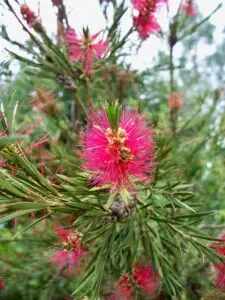
6. Eucalyptus cladocalyx ‘Nana’ (Dwarf Sugar Gum)
This dwarf sugar gum has such a strong, elegant presence. Its canopy is rounded and full, and the glossy leaves are a deep green that catches the sun beautifully. The bark is smooth and pale, creating a lovely contrast with the foliage. While it can reach up to 10 metres if left alone, in most gardens it stays smaller, especially if pruned. It grows steadily rather than quickly, making it manageable and not overwhelming. I like it for the dappled shade it creates — not too heavy, just enough to cool a corner of the garden. It’s extremely tough and drought-tolerant, so once it’s settled in, it pretty much looks after itself.
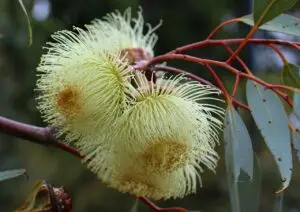
7. Melaleuca ‘Revolution Gold’ (Golden Myrtle)
If you want instant cheer, Revolution Gold is perfect. Its bright golden-yellow foliage glows in the garden all year round, and in the right light it seems to radiate warmth. What I enjoy most is how it lifts a space, even in the darker corners of a yard. The leaves are fine and soft, and when the wind moves through them, the whole shrub shimmers like sunlight on water. Growing to around 3–5 metres, it’s fast-growing and very responsive to pruning, making it great as a hedge or screen. Birds and insects are attracted to its flowers, and the vibrant foliage provides a striking backdrop for other plants.
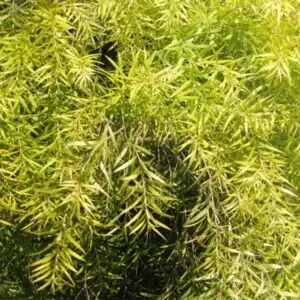
8. Acacia cognata ‘Green Screen’
This weeping wattle is all about softness and movement. The fine, cascading foliage has a graceful look, and when the wind stirs it, the branches sway gently, giving the garden a calm, flowing energy. The green is fresh and lush, and when new growth appears it looks almost luminous. It grows quickly, usually reaching 3–5 metres, and it responds very well to trimming, which is why it makes such a good hedge or privacy screen. I like that it feels both modern and natural — it suits a native garden but also blends beautifully into more formal landscapes. It’s low-maintenance, and with occasional pruning, it stays neat and contained.
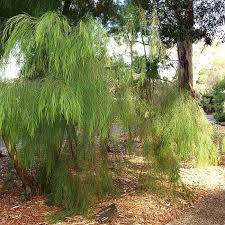
Planting small native Australian trees is all about balance — proportion, beauty, and a connection to the landscape. Each of these species offers something special: the bold colour of a bottlebrush, the elegant movement of Viminaria juncea, the golden glow of a melaleuca, or the sculptural flowers of a hakea. What unites them is their adaptability to small spaces, their non-invasive nature, and the way they bring life, texture, and movement into the garden. With thoughtful planting and pruning, these trees will give you years of joy and help create a garden that feels alive, welcoming, and unmistakably Australian.